The Sunday One-Page Plan: A Weekly System to Balance Classes, Assignments, and Free Time

Most students start Monday with energy and good intentions, then watch their study motivation fade by Wednesday when deadlines, classes, and social plans collide. The problem is rarely laziness. It is usually a lack of a clear, realistic overview of the week ahead. A weekly study planner system for busy students solves this by giving you one simple place to see everything at once. Instead of juggling separate to-do lists, calendar reminders, and mental notes, this Sunday planning system helps you balance classes, assignments, and free time on a single page so you can start the week calm and stay consistent past Monday.
Why Motivation Fades After Monday
Monday motivation is often based on feelings rather than a plan. You feel inspired to catch up, work harder, and finally get organized. But without a structure that accounts for your actual time and energy, that inspiration quickly meets reality. You might underestimate how long an essay will take, forget about a lab report due Thursday, or leave no room for rest and then feel guilty when you need a break. When your plan is too vague or too ambitious, every unexpected task feels like a failure, and motivation drops. A sustainable system does not rely on willpower. It relies on visibility, priorities, and time that is already reserved for both work and recovery.
The Core Idea: One Page for Everything
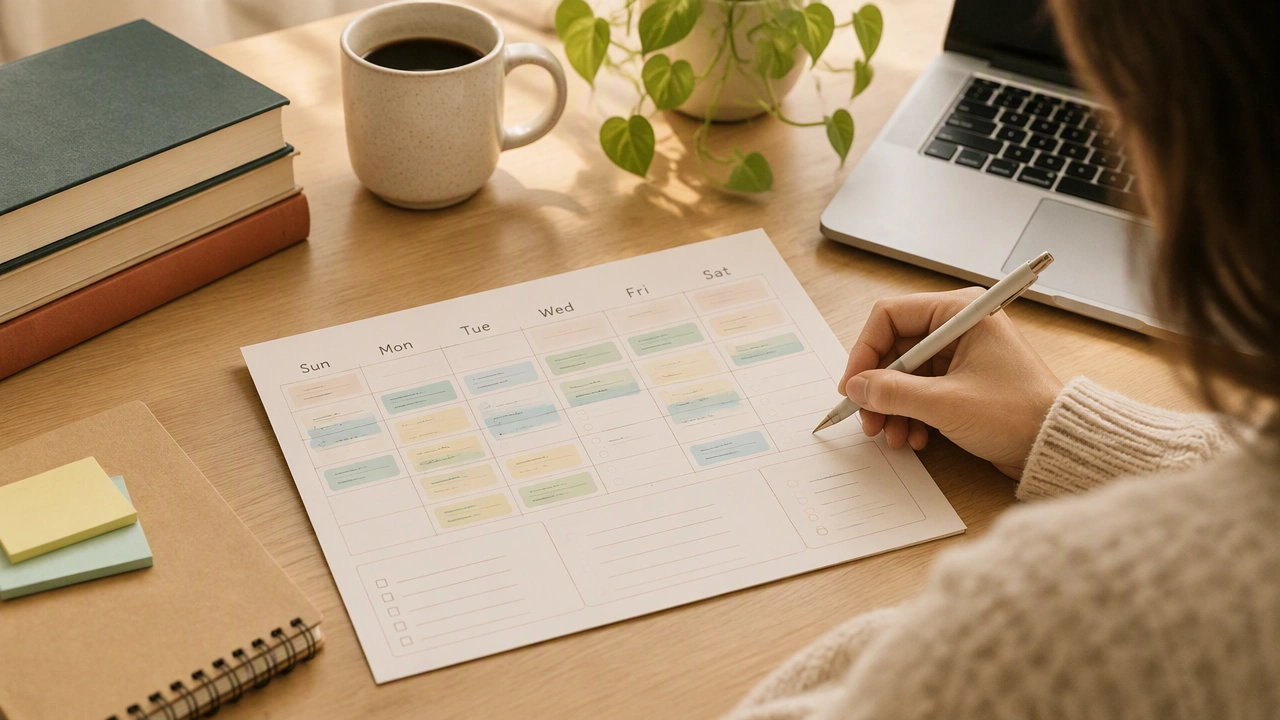
The power of a one-page system is constraint. When you limit your weekly plan to a single sheet of paper or a single digital page, you are forced to make choices. You cannot add endless tasks. You have to decide what actually matters this week. This page becomes your single source of truth. It should show three things side by side: your fixed commitments like lectures, seminars, and work shifts; your flexible academic tasks like readings, assignments, and revision; and your protected free time for rest, friends, exercise, and hobbies. Seeing all three together prevents the common trap of planning only for study and then feeling overwhelmed when life happens. It also makes it easier to spot an overloaded day before the week begins.
The Sunday Setup: A 35-Minute System That Saves Hours
Choose a consistent time on Sunday, ideally in the late afternoon or early evening, to set up your week. You need only a blank sheet, a notebook, or a simple digital document. Set a timer for 35 minutes so the process stays focused and does not become another time-consuming task.
Step 1: Brain Dump Your Week (10 minutes)
Start by emptying your head. Look at your course syllabus, learning platform, and calendar, then list everything that needs attention in the coming seven days. Include classes, deadlines, meetings, appointments, and personal commitments. Do not organize yet. Just capture.
Step 2: Sort Into Three Columns (10 minutes)
Divide your page into three clear sections.
- Fixed Schedule: Write down all time-bound events. Lectures, tutorials, labs, part-time work, and travel time. This is your non-negotiable framework.
- Key Assignments and Study Tasks: List the 3 to 5 most important academic outcomes for the week. Instead of vague items like study biology, write specific tasks like complete problem set 4, draft introduction for history essay, or review lecture notes for chemistry chapters 3 and 4.
- Free Time and Recovery: Block out time for sleep, meals, exercise, social activities, and true downtime. Treat these blocks as appointments with yourself.
Step 3: Assign Tasks to Days (10 minutes)
Now distribute your key tasks across the week realistically. Look at your fixed schedule and place demanding tasks on days with fewer classes. Break large assignments into smaller steps and spread them over several days. For example, instead of write research paper on Thursday, plan find three sources on Tuesday, create outline on Wednesday, and write first draft on Thursday. Leave one buffer slot each day for overflow or unexpected work. If a day already looks full with classes and other commitments, do not add more.
Step 4: Review and Commit (5 minutes)
Take a final look at your page. Ask yourself: Is this doable if I get tired or something takes longer than expected? Have I left at least one evening or half-day mostly free? Circle your top three priorities for the week so you know what must get done even if everything else shifts.
How to Use Your Page During the Week
Your Sunday page is not meant to be perfect. It is meant to be used. Keep it visible on your desk, in your notebook, or as your phone background. Each morning, take two minutes to check what is planned for the day and choose your first task. Each evening, spend three minutes updating the page. Cross off what is done, move unfinished items to another day, and note any new tasks that came up. This short daily check-in prevents small delays from turning into stressful pileups. If you finish a task early, do not immediately fill the time with more work. Acknowledge the progress and use the extra time for rest or for getting ahead on tomorrow’s priority without pressure.
Why Protecting Free Time Keeps You Motivated
Many students feel guilty about scheduling free time, but rest is what makes consistent work possible. When free time is planned, you can enjoy it fully without the background worry that you should be studying. It also gives your brain time to consolidate what you have learned. During your Sunday setup, be specific about free time. Instead of leaving it blank, write run with friends at 6 pm, no-study dinner on Friday, or Sunday morning off. This clarity helps you say no to extra commitments when your week is already full and say yes to rest without hesitation. A balanced week is more motivating than a packed week because it feels sustainable.
Common Mistakes That Break the System
Even a good system fails if it is used in an unrealistic way. Watch out for these common pitfalls:
- Planning every hour: A minute-by-minute schedule leaves no room for breaks, delays, or deeper focus. Plan in blocks of 60 to 90 minutes with short breaks in between.
- Listing only deadlines: If you only write down due dates, you will underestimate the steps needed to reach them. Always break assignments into actions you can start today.
- Ignoring energy levels: Schedule demanding analytical work when you are most alert and lighter tasks like organizing notes or answering emails when your energy is lower.
- Creating a new system each week: Consistency matters more than design. Use the same one-page layout for at least four weeks before you change it. This builds a habit and makes planning faster.
How to Make This System Last Past Monday
Motivation that lasts is built on small wins and regular review, not on perfect weeks. At the end of each week, take five minutes to ask what worked, what took longer than expected, and what you want to adjust next Sunday. Keep the reflection short and factual. If you completed two of your three priorities, that is progress, not failure. Over time, you will learn how long tasks really take and how much free time you actually need. Your one-page plan will become more accurate and more personal. The goal is not to control every minute, but to create a calm, clear overview that helps you act with intention from Sunday to Saturday.
Start this Sunday with a blank page and 35 minutes. Keep it simple, keep it visible, and let one page guide your whole week.